War Diary Entries
Givenchy sector – 4.12.1915: Situation normal except for occasional bursts of fire on both sides from Artillery and Machine Guns.
Givenchy sector – 5.12.1915: Collapse of shelter in George Street [trench] causing death of Pte’s Thomas and Hyatt.
Great artillery bombardment in the afternoon. Good work done draining communication trench and repairing parapet.
Givenchy sector – 6.12.1915: Quiet day except for bombardment by our guns at 4.30pm, followed by enemy’s retaliation. Sgt Gorse and 2 men wounded by shell in Le Plantin.
Relieved by 20th Bttn commencing 7pm. Corp Evans & Pte Rason wounded in George Street.
King Edward School obituary
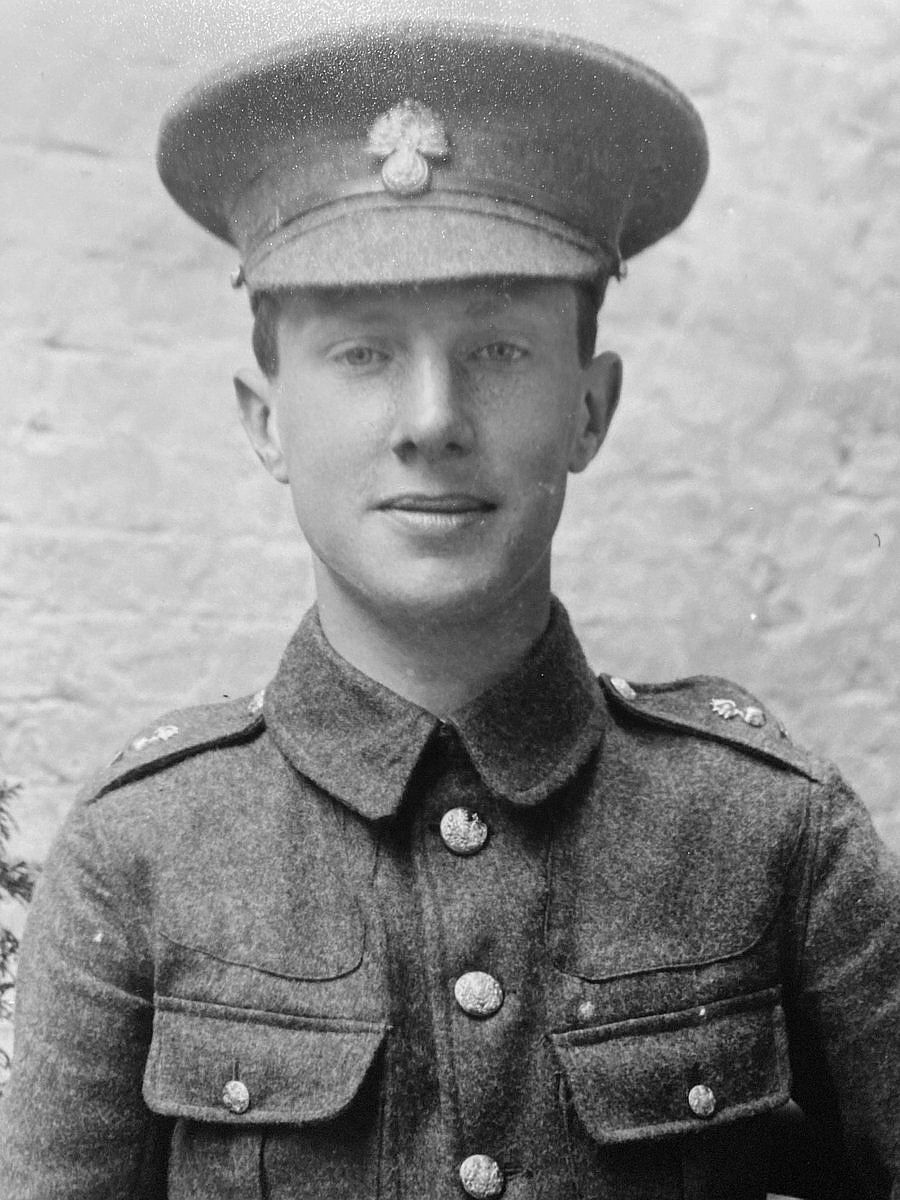
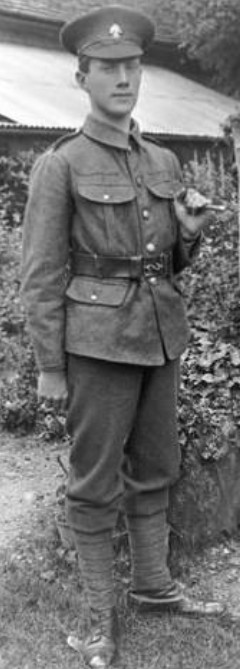
Victor Hyatt was the eighteen year old son of a Wood Street saddler and harness maker. He enlisted in 1915 with two of his friends from school, Ronald Newland (a boarder between 1907-1913) who became a Lieutenant in the Public Schools Battalion of the Royal Fusiliers (City of London Regiment) – wounded in the arm whilst leading a patrol Ronald was repatriated to hospital in Oxford – and John Picket (1908-1914), who was wounded in August 1916 and survived the war as a prisoner of war.
Victor became a Private in D Company, 18 Battalion Royal Fusiliers (City of London Regiment), and in June 1915 moved to Clipstone Camp in Nottinghamshire. Taken over by the War Office the following month, the battalion moved to Wiltshire for intensive training in preparation for action on the Western Front. In August he moved to Tidworth, and on November 8, Victor was with the battalion inspected by Queen Mary before it embarked from Folkstone a week later. German mines at the entrance to the harbour delayed their arrival at Boulogne. Moving to the area around Bethune, the men were billeted in a tobacco factory and the Ecole Michelet in the town. Victor entered the trenches for the first time at Vermelles, before moving in severe weather and hard frost to Le Plantin, north-west of Givenchy. His reported ‘bright and energetic disposition’ won him many friends. When not frozen, the trenches were desperately wet and badly drained, the parapets old and broken, and most of the shelters were inadequate and quite unsafe. With no communication trenches between the support and the firing lines, movement during the day was totally impossible and any relief could only take place at night. Men lost their rifles, their equipment and even their boots in the thick mud, whilst the Germans shelled them remorselessly. Victor needed every ounce of reserve to maintain his humour.
He had been in France for just under a month when on December 5, during a period of intense shelling and as a result of the rain and severe wetness, Victor’s dug-out had become dangerously unsafe – the term at the time was ‘cranky’, causing the wooden posts and sandbags to fall and crush him. He lies buried at Brown’s Road Military Cemetery at Festubert, five miles north-east of Bethune.
 Victor Hyatt’s grave at Brown’s Road Military Cemetery, Festubert
In a letter to Victor’s mother, his school friend Ronald Newland wrote that ‘It is the greatest sorrow I have ever had, for after all he was the greatest friend I ever had. The only possible consolation I can hold out to you is that he suffered no pain and death was practically instantaneous.’ Victor is commemorated on the Memorial and Reredos in Holy Trinity Church, on the War Memorial in the Garden of Remembrance, and in the Memorial Library at his old school.
18 Battalion had a comparatively light introduction to warfare, for it was disbanded on April 24 1916 and most of these well educated young men were commissioned and dispersed to other battalions and regiments.
Source: King Edward VI School, Stratford
Stratford Herald Obituary
Stratford Herald Friday 10th December 1915
LOCAL ROLL OF HONOUR - PRIVATE VICTOR W. HYATT
A sad letter has just reached Mr. W. Hyatt of Wood Street, Stratford on Avon containing the news that his eldest son, Victor, had been killed in action at Plantin. Private Victor W. Hyatt who was only 18 years of age was attached to the D Company of 18th Royal Fusiliers enlisted in the early part of this year with two other old Grammar School boys. His bright energetic disposition won for him many friends and in breaking the news to the parents a comrade wrote “He was such a good fellow, such a good soldier that his loss will be severely felt in D Company.”
It was only about a month ago that the Fusiliers left for France and deep sympathy will be felt for the bereaved parents in the heavy loss they have sustained. It is sad to see a life so full of promise cut off abruptly but there remains some consolation in the knowledge that he did his duty to his country and was very keen in doing it. He now lies buried side by side with his chum in the little cemetery at Le Plant, two crosses marking their last resting places.