
South Warwickshire Family History Society War Memorial Transcription Project |
|
|


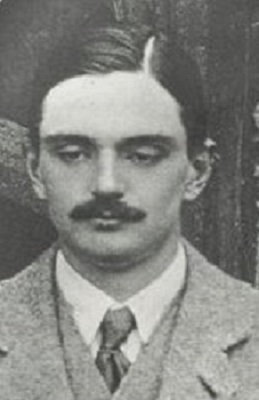
|
Military History |
| Theatre of War | Medals | Commonwealth War Grave or Memorial |
|---|---|---|
| France and Flanders | 1914 Star, British War & Victory Medals | Ypres (Menin Gate) Memorial |
| Arrived in Theatre | Medal Citation (if app) | SWFHS Area Memorials |
| 7 Oct 1914 | ~ | Tysoe & Compton Wyngates |
| Action, Battle or Other Reason Killed | Date and Place Enlisted | Other War Memorials |
| Battle of Frezenberg (Second Battle of Ypres) | Commissioned into the Yeomanry in 1912 | St. Mary's Church, Moulsoe, Milton Keynes |
| Castle Ashby, Northamptonshire | ||
| Place of Death | Previous Regiments or Units | Eton School Roll of Honour |
| Frezenberg | Northamptonshire Yeomanry | Balliol College Roll of Honour |
Military Service
- Commissioned as a Lieutenant in the Northamptonshire Yeomanry in 1912
- Commissioned as 2nd Lt in The Horse Guards on 14 Aug 1914
Circumstances Leading to Death (Normally from War Diary)
On the night of 12th-13th May, 1915, 1st & 3rd Cavalry Divisions, relieved the hard pressed battalions of 28th Division just in time to take the full force of the last German attempt to break through on this front and capture Ypres. At 3.30am of 13th May there began an incessant and heavy bombardment of the front and back areas of the British positions. X Corps diary states it was the heaviest yet experienced. The trenches taken over the night before by the Cavalry were in poor condition. Only recently dug they had no communication trenches nor were they wired. The heaviest bombardment fell on the front between Hooge and the Ypres-St Julien road and this, together with the rain reduced the trenches to a quagmire. At 8am the enemy broke in on 7 Cavalry Brigade’s front, held by the Leicestershire Yeomanry, 1st Lifeguards and 2nd Lifeguards, all about 300 strong. Being on a long gentle forward slope it was only lightly held. The Germans then bombed out the remaining defenders and the Leicestershire Yeomanry were driven into the trenches held by 6 Cavalry Brigade. Also shelled out of their trenches were were the 5th Dragoon Guards in the centre of 1st Cavalry Division front and a squadron of 18th Hussars of 2 Cavalry Brigade on the extreme left, nearest 4th Division. Although hit hard, 4th Division managed to eventually contain this attack as did 80 Brigade to the right of the Cavalry and 2 Cavalry Brigade (4th Dragoon Guards, 9th Lancers and 18th Hussars) held their ground as well. It was only on 7 Cavalry Brigade’s front where there was real concern. Here communications were very difficult and dense black smoke from the shelling obscured vision. The extent of the gap caused by the German breakthrough was not known. To the right of this gap the North Somerset Yeomanry of 6 Cavalry Brigade, 3rd Cavalry Division held on as did the 2nd Dragoon Guards (Queen’s Bays), 1 Cavalry Brigade, to the left. 8 Cavalry Brigade of 3rd Cavalry Division (Royal Horse Guards, 10th Hussars and the Essex Yeomanry) were deployed behind this gap. At 2.30pm a counter attack was launched by part of 9 Cavalry Brigade, 1st Cavalry Division (15th Hussars, 19th Hussars and Bedfordshire Yeomanry) and some of the old line was regained. The Germans were evicted and even pursued but heavy fire made it impossible to reach all of the old line nor to stay there. A new line of mainly shell holes on a reverse slope 1000 yards back was occupied extending from Railway Wood on the right to the trenches of 1 Cavalry Brigade (2nd Dragoon Guards, 5th Dragoon Guards and 11th Hussars) on the left. The above taken from, and courtesy of, the London WW1 Memorial.Lord Compton was killed during the successful counterattack by the Royal Horse Guards who regained the original positions.
| Personal & Family History |
| Birth Date/Place | Bapitsm Date/Place |
|---|---|
| 3 May 1893 at Kent House, Knightsbridge | |
| Parents Names | Parents Abode |
| William George Compton , Marquess of Northampton | The Castle, Castle Ashby |
| Mary Florence Compton nee Baring | |
| Wife & Marriage Date/Place | Children & Year of Birth |
| Single | ~ |
| Schools | Colleges |
| Eton School 1910-1911 | Balliol, Oxford 1911-1914 |
| Address History | Employment History |
| 1893 - Knightsbridge | 1911 - Student |
| 1901 - The Castle, Castle Ashby | 1914 - Aide de Camp to the Duke of Connaught |
| 1911 - Balliol College, Oxford | |
