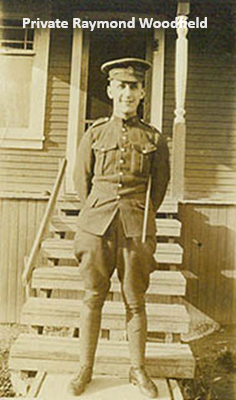
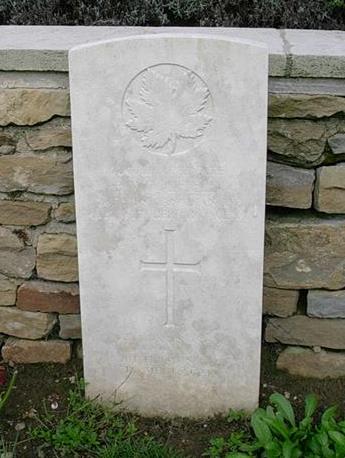
|
His register of effects states that he was a member of the 12th Entrenching Battalion, late of 14th Battalion Gloucestershire Regiment.
His Soldiers Who Died in the Great War record states that he was a member of 14th Battalion Gloucestershire Regiment.
His CWGC record states that he was "Gloucestershire Regiment 12th Entrenching Bn., late 14th Bn attached to 7th Bn. Queen's Own (Royal West Kent Regiment)".
Research reveals that the14th Battalion Gloucestershire was disbanded on 11 Feb 1918 and 12 officers and 250 men transferred to 13th Battalion. [The Long Long Trail]. This is confirmed by War Diary [WO 95/2488/1], the last entry in which is dated 14 Feb 1918 and the entry on 11 Feb 1918 states "12 officers and 250 men transferred to 13th Gloucester Regt. The remainder of the Battalion marched to Proven... and then marched to Surplus Wing II Corps Reinforcement Camp.
The Long Long Trail website tells us that the 12th Entrenching Battalion was formed from the surplus of four Service Battalions: 14th Gloucestershire Regiment; 16th Cheshire Regiment; 20th Lancashire Fusiliers and 23rd Manchester Regiment. Appears to have been formed at II Corps Reinforcement Camp at Merckeghem. III Corps reported that the battalion was merged into the 7th Queen’s Own (Royal West Kent Regiment) on 1 April 1918 when they were in the lines near Bois de Hangard SE of Amiens.
The 12th Entrenching Battalion war diary [WO 95/761/5] consists of only a report written 7 years later by Lt. Col. W. Hodson of Liverpool which confirms, more or less the above information, except that its states that the 12th Entrenching were absorbed by the 7th RWK's at Genetelles, however we know from the 7th Bn war diary that they did not reach Gentelles until 5 Apr 1918 by which time the two battalions has already merged and Fred had been killed.
In conclusion it seems that Fred was a member 7th Royal West Kent Regiment when he was wounded and then died of his wounds on 4th April 1918.
|